Phil, My Baby

Despite my constant intention to be more consistent with this blog, (do people even read blogs anymore?) the months soared with not a word written. As the year comes to a wrap, I have neglected not just my blog writing but also my author writing. 

Life got chaotic. A sick dog. An unexpected stay by a family member and her dog. Two dogs-one old and sick. The other-healthy but anxious. A young, fearful, and unpredictable dog can be as stressful as a dog who barks in the night to be cared for. 

Phil’s illness started in March. Coughing and wheezing through the night, with a very congested nose. A vet appointment resulted in an upper respiratory infection. Antibiotics cured the infection but not the overly snotty (sorry, will be writing about snots a lot) nose. That got worse. 

More medication with an antihistamine. Wait for two to three weeks. Nothing. Then stronger meds. Wait more weeks. Still, nothing. My poor baby could barely breathe. Through the night he’d struggle to hock the phlegm free from his nose. I’d be there with tissue to pull the yellow mucous from his nose, stringy and thick like a pulled mozzarella stick (gross but true) from his nostrils. 

This went on for months. I kept tissues all over the house to be ready for the boogers. There were plenty. 

After another vet appointment, we tried steroids. With a concoction of prednisone, an antibiotic, and five Benadryl tablets a day, Phil could finally breathe easy.  After about three months of sleepless nights, Phil and I were finally able to get some sleep.

As is often the case with prednisone, (I know from experience) the drug may ease the intended health issue, but it also causes harsh symptoms of its own. Phil’s back legs grew weaker. Being fifteen, they weren’t strong to begin with. He could no longer climb stairs and needed help getting up. Even with no-slip booties, he has difficulty walking. 

The steroids gave him an insatiable thirst and appetite. He was unable to be calm, constantly panting and pacing. I no longer recognized my dog. While the old Phil would lick me all over the face, the sick Phil turned his head from me. I understood the changes he was going through, (I had the same side effects) but he didn’t.

A month later, I called the vet and told him we needed to wean Phil off those crazy pills. His legs slowly got stronger. He still can’t do stairs and a couple of times when the gate wasn’t up, he tried to go downstairs and fell the entire way down. I hurried to him (cursing myself for forgetting to put the gate back up) and plucked him back to his feet. The old dog shook himself off and slowly walked around the entire basement, taking in what used to be his territory. 

Since he was already down there, I lifted him onto the couch. We cuddled together like we used to all of those years–14 years (he was two when I adopted him). He misses his basement. That is where we spent the most time together. It’s where we slept and spent lazy days/nights on the couch. It’s where he stood/ lay next to me on the floor while I did yoga–giving me kisses at every opportunity. Sometimes, he’d lie so close to me that his seventy-pound body pressed against mine and I couldn’t move to do yoga or any exercise. 

But that’s where he always wanted to be–next to me. 

There’s so much I already miss about him. He was a lazy, calm, loving dog that I used to have to wake up at ten because he’d sleep till noon if I’d let him. 

Now he wakes up at six with a bark. If he needs me at night, he barks. Sometimes he barks throughout the day just as he lying on his blanket, not seeming to need anything. Except, for a little attention. 

It’s a strange feeling, missing your dog while he’s still alive. 

I’m missing the way he used to be. The way we used to be together. I didn’t think time would ever change our relationship. But the dynamics of a relationship never lasts for anyone/thing. Not for siblings. Not for parents. Not for friends. Not for lovers. Not even for dogs and their owners. 

Everything changes. 

I know I just spent my last Thanksgiving with him, and this Christmas will also be Phil’s last. I adopted Phil from Animal Care and Control on December 26,2010. He is a Pitbull mix. Not the type of dog that usually makes its way out of Animal Control with a beating heart. 

Five months ago, I didn’t think he’d be alive come Labor Day. Now I have hope he will be with me to celebrate his 14th Gotcha Day with me.  Last year, we had a huge birthday party for him. I turned a post-Christmas party with my siblings, nieces, and nephews into a huge birthday celebration. 

We had birthday decorations, birthday hats, a birthday cake, and, of course, a birthday song. I’m glad I did that last year. I don’t think my sixteen-year-old doggie will be up for all that commotion this time around the sun. Though, I don’t think he’d mind a birthday cake.  

So, Phil is not the same. He barks a lot. He wakes me up at all times of the night/morning. I am sometimes impatient though I try not to be. One day I will miss that bark. I will hear his bark only in my dreams and will wake up hoping it is real, expecting to see him. Then reality will set in. My dog is no longer here. How will I take that?

I don’t yet know. My dog is still here. Upstairs. Sleeping quietly, for now. I will go to him and kiss the top of his nose. Smell is fur. Hold him in my arms. Tonight, I will hear his bark. And no matter how tired I am, I won’t get frustrated, because I’ll remember a time will come when the bark I hear will no longer be real. 


Margaret does what she wants

Wrinkles cover her thin-skinned ninety-two-pound body, compliments from her eighty-seven years of living in this, at times, tumultuous world.  But she’s as easygoing as they come, mostly unbothered by external noise.

She’s a headstrong, entirely capable, and stubborn woman. I love all of those qualities about her.  She minds her own business and lives the way she wants. She talks to me in her beautiful Irish accent. She was born on a farm in Ireland. She rode a horse to school with a trap in the back where kids hitched rides on the way. She misses the horses. The farm had rabbits and dogs and pigs, but she loved the horses the most.

A couple years ago, her son privately talked to her doctor to persuade the doctor to tell her she couldn’t drive anymore. One day she joined me for a walk with my dog Phil and she had a disgruntled look on her face. I asked what was wrong.

“I know my son told my doctor to tell me I can’t drive anymore. I’m not stupid.” She looked up at me with her thin lips pressed bitterly against each other and her short brown hair swaying in the breeze. “But I do what I want. He’s not the boss of me.”

Later that day I was sitting on my front lawn with Phil and her garage door opened. Seconds later, a blue van backed out of the garage and down the driveway. She pulled into the street and gave me a wave from behind the wheel as she passed.

She’d found her keys. She’s determined like that.

Another day I was walking Phil past her house, and she was in the garage pounding out a dent in her car. I asked her what happened. She said she hit something in the garage but had to hurry because her son would be over soon. I asked if she needed help, she answered, “No, just don’t tell my son.”

That made me smile. Most everything about that special woman makes me smile. I wish to be more like her. I was down one day and told her about it. She told me she doesn’t think about thoughts that bring her down. I imagine that isn’t something she just started doing in her later years. I’m sure she lived by that adage even when she was younger and raising six children. She talks of her past without regret or resentment. She had a hardworking husband, (whom she also tells me wasn’t the boss of her) but times weren’t always easy, especially the early days in Ireland when work was hard to find or when one of her children took their own life.

None of her pains from the past show on her face now. At least none that I can see, though it doesn’t mean it isn’t there. She chooses to live as happily as she can. Not many people make that choice. Some live bitterly and filled with anger. When my nieces and nephews were young, they’d come over and play in the street. Naturally, they’d make a lot of noise. She’d always come outside, not to yell about all the racket, but to sit on her front porch and watch the kids play because she loved to hear the sound of children’s laughter.

Margaret lives across the street from me, and she loves to sit at her front window with her cat. No matter how bad of a day I may be having, when I see her face at the window I always smile because she waves at me with such excitement, huge smile and arm waving fast and high, as though she’d been waiting all day to see me. I will miss that when the day comes where she is no longer at the window. Hopefully that won’t be for a while.

Margaret came over a couple days ago to tell us she and her son and daughters are going to England but won’t be stopping in Ireland. She doesn’t have much family there anymore and doesn’t want to impose on the ones still there. We sat and got to talking and she shared with me how happy she is that we are neighbors. She went on about how comforting and safe she feels that we are right across the street from her. Margaret doesn’t live alone. She has her daughter, and her son stops by almost every day, yet still she appreciates that we are neighbors.

That meant something to me, and I hope she knows how much I appreciate that we are neighbors, too.

Author Stella May Shares the Life of her Great-Grandmother

¬What’s in a Name? from Stella May Have you ever wondered if or how a person’s name affects his/her personality? Does your name determine your fate? Or was Shakespeare right to shrug off labels? The older I get, the more I am convinced that the Bard was wrong—that there is something in a name, after all. My great-grandmother was named Tatyana. There are several different meanings of that name. From ancient Greek, it translates as “founder of order” or “organizer.” According to other translations, it means “a fairy queen,” or “fairy princess.” She was both. Born to a noble Russian family, she was raised like a princess. Later in life, by fate’s capricious will, she became head of the household, where she reigned supreme, bringing order and organizing the lives of her family. Let’s start from the beginning: Tatyana Fortushina was born in 1901 in Qusar (Kusary), located in the foothills of the Great Caucasus Mountains in Azerbaijan. One of her brothers was an orthodox priest. The other was in the army. She also had two sisters. Unfortunately, the details about my great-grandmother’s family are sketchy at best. According to all the people I have talked to, Tatyana (or Baba Tanya, as everybody called her) wasn’t close with her parents or siblings. My guess? Probably because of her highly unusual marriage. As I said, my great-grandmother was raised and educated like a princess, graduating from an establishment (St. Nina’s) for girls of prominent Christian families, and was the apple of her parents’ eye…. until she met my great-grandfather, that is. Here, we draw a big, fat blank. To this day, no one in the family knows how or why Meshady Abbas, the son of an Iranian manufacturer, ended up in post-revolutionary Azerbaijan. When did my great-grandparents meet? And how on earth did a Muslim merchant get parental permission from one of the prominent members of Christian society to marry his daughter? The details are shrouded in secret. One thing we know for sure, though, is that in order to marry my great-grandmother, my great-grandfather converted to Christianity. And so, Meshadi Abbas became Artemy Kurdov and married my great-grandmother. Vera, my grandmother, was born the next year. Their small family was happy—at least I want to believe that they were—but not for very long. When my grandmother Vera was a toddler, Artemy Kurdov, who embraced the Communist ideology wholeheartedly, was executed as an enemy of the nation. Ironic? Not in the least. It’s hard to understand now, but, during Stalin’s regime, just sneezing the wrong way was enough to be labeled as an enemy of the state—literally. And my daredevil of a great-grandfather had managed to become something of a Major in the small city where he lived. I assume that’s why he was ultimately executed… or perhaps he just said something, or did something, or looked at someone in passing, and some zealot took a notice and reported it. I don’t want to think about my great-grandfather’s days in prison or the beatings he endured. Torture was a regular practice of the NKVD—the original name of the KGB. Thus, my great-grandmother Tatyana was left a young widow with no income to support her and her daughter, and no family to turn to for help. But instead of falling apart, this delicately built dark-haired princess squared her shoulders and spat fate in the eyes. She showed everybody what a graduate of St. Nina’s was made of! Remembering the sewing lessons she took in school, Baba Tanya soon became one of the most sought-after seamstresses—all the wives of the city’s elite were dressed by her. Much later, her granddaughters, my mom and my aunt, paraded in the clothes that were the subject of envy to their friends. She had finally found her footing, and life in her household became content. They had a roof over their heads, food on the table, but, most importantly, they had each other. And then… Her only daughter, her whole world, the reason of her being, fell in love with a man almost twice her age… and had to get married, or else. I can only wonder what Baba Tanya felt, when her nice and quiet world suddenly fell apart, as her own daughter repeated the same fate she had? As a mother, how would I react if I were in her shoes? Would I let my daughter chose her own fate, or would I try to interfere? I honestly don’t know. In the end, my great-grandmother gave the couple her blessings and stepped aside. For the next five years, she lived alone. Was she hurt? I imagine she was. Feeling lonely? Abandoned? Oh, absolutely. But she was too proud to show her emotions. Always restrained, now she became coolly aloof. Years later, when her beloved daughter became a widow with two small children at the age of twenty, she immediately took all of them under her wing. How could a woman, a mother, and grandmother keep harboring grudges when three people she loved more than life itself needed her? Hence, she became the head of an all-female household, one she ruled for almost three decades. The second meaning of her name – the founder of order—had come into play. According to my family, she was a stern woman, fair and loving, but reserved. She didn’t suffer fools, didn’t forgive easily, and meted out punishment with a precision of a surgeon. Her scalpel was her tongue—sharp, cold, and merciless. But her love for her girls, although never visible, ran deep and was true. My grandmother Vera always said that, if not for Baba Tanya and her sacrifices, they probably wouldn’t have survived the hunger of World War II. During that horrible time, to suppress her own hunger, Baba Tanya started to smoke. She went hungry for days, giving her tiny bread portions to her granddaughters. She learned to cook from bran and waste products, conjuring meals out of things unimaginable. She stood hours on end in bread lines, barely alive from hunger, all the while puffing away her disgusting handmade cigarettes. That cheap tobacco mix affected her lungs, ultimately causing her to pass away years later when I was barely three years old. My memory of her is vague: a frail figure in a starched white kerchief, thin and pale-faced, coughing loudly. I remember I was afraid to enter the room when the ‘scary old woman’ was lying in bed. I suppose, for a small child, her frailty, her illness-ravished face, that horrible dry cough could and did look scary. But still…to this day, I feel ashamed of myself. Interestingly enough, while I don’t remember much of my great-grandmother’s face, one thing that stuck with me is her hands, which I can remember clearly. Isn’t that just strange? Or is it just the wonders of human memory? Here is a peek at my latest time travel romance novel for your reading pleasure.

One key unlocks the love of a lifetime…but could also break her heart.

Nika Morris’s sixth sense has helped build a successful business, lovingly restoring and reselling historic homes on Florida’s Amelia Island. But there’s one forlorn, neglected relic that’s pulled at her from the moment she saw it. The century-old Coleman house.

Quite unexpectedly, the house is handed to her on a silver platter—along with a mysterious letter, postmarked 1909, yet addressed personally to Nika. Its cryptic message: Find the key. You know where it is. Hurry, for goodness sake!

The message triggers an irresistible drive to find that key. When she does, one twist in an old grandfather clock throws her back in time, straight into the arms of deliciously, devilishly handsome Elijah Coleman.

Swept up in a journey of a lifetime, Nika finds herself falling in love with Eli—and with the family and friends that inhabit a time not even her vivid imagination could have conjured. But in one desperate moment of homesickness, she makes a decision that will not only alter the course of more than one life, but break her heart.

’Til Time Do Us Part is available in Kindle and Paperback at AMAZON.

Stella May is the penname for Marina Sardarova who has a fascinating history you should read on her website. Stella writes fantasy romance as well as time travel romance. She is the author of ‘Till Time Do Us Part, Book 1 in her Upon a Time series, and the stand-alone book Rhapsody in Dreams. Love and family are two cornerstones of her stories and life. Stella’s books are available in e-book and paperback through all major vendors. When not writing, Stella enjoys classical music, reading, and long walks along the ocean with her husband. She lives in Jacksonville, Florida with her husband Leo of 25 years and their son George. They are her two best friends and are all partners in their family business. Follow Stella on her website and blog. Stay connected on Facebook, Twitter, and Pinterest.a>

Missing Old Times

The basement ceiling is still streaked with marks from when we used to play football. Made-up goal lines, just in front of the bar. I really don’t know how we didn’t break the glass case, shelved with wine and beer glasses, in the corner behind the bar. It’s a good thing. Grandma would have lost her shit.

How many touchdown passes had been thrown in that basement from when you kids used to live here? So many the Bears would have been envious.

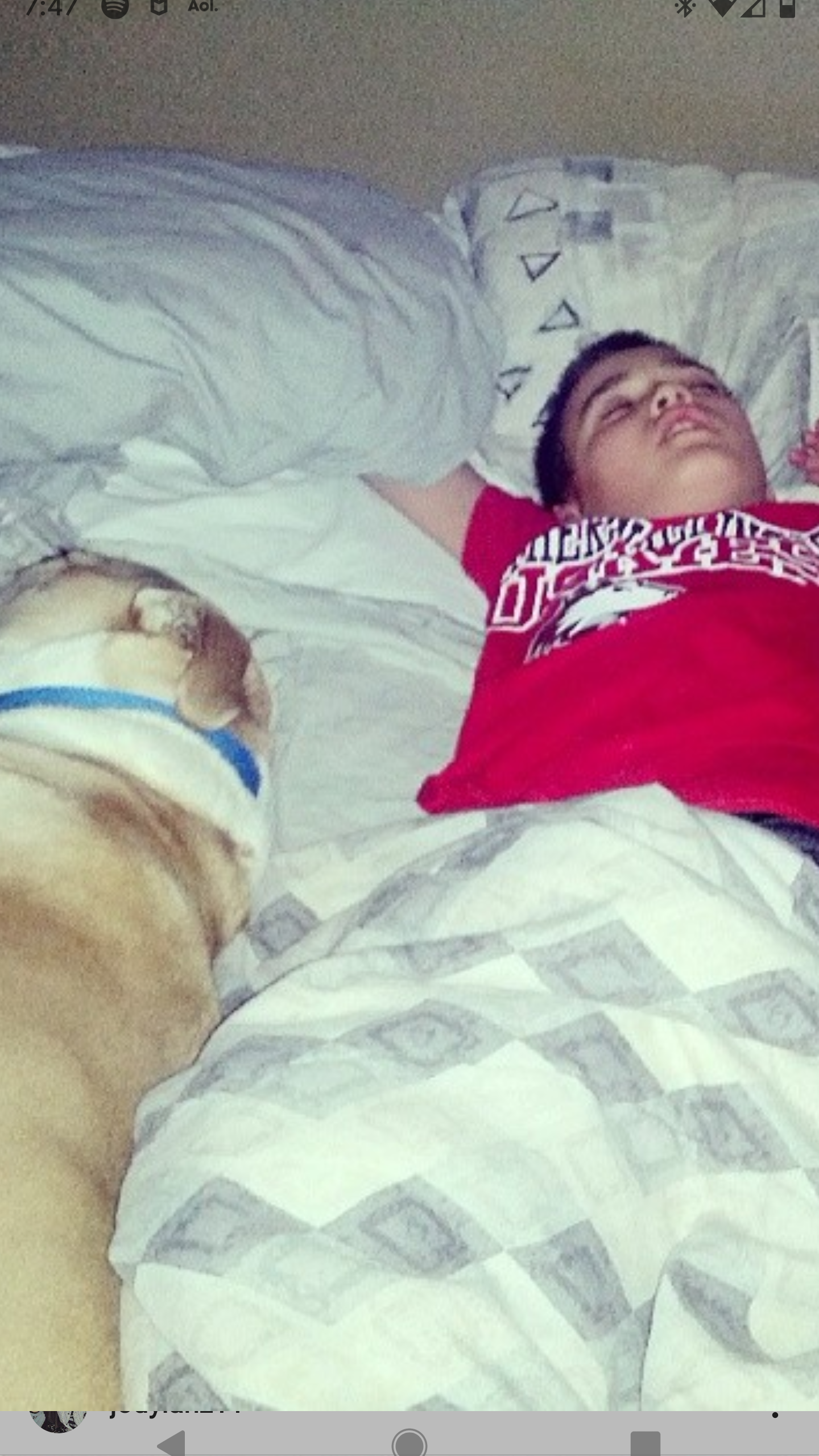
The bin of swords we used to fight with, sometimes against each other, other times against imagined zombies, has been packed away a long time ago. That time I took your swords from you and hid them in my closet because you scared the dog, chasing him with a raised sword in your hands.  Phil didn’t understand the game. You were young, but old enough to understand the innocence of a dog. You were just being mean, because you were the youngest and used to being a menace.

So, I had to take your swords away. Not forever. Just for a little while.  Your older sister, always the protective Mother Bear, tried to sneak and steal them back, but I wouldn’t let her. She was mad at me. Her little brother could do no wrong. Ever. I used to always say that you could burn the house down and she’d yell at me if I gave you the slightest sideways look.

She used to knock on my door late at night. Two o’clock in the morning was nothing to that nine-year-old girl. I’d stop writing and we’d talk on my bed, mostly about the divorce, sometimes about other things. But we talked. The divorce happened when you were so young, and you were forgetting the memories you had of your mother and father being together. That was sad for you.

So, we talked through some memories. Popcorn movie nights with your parents. Watching Elf with your dad. That Thanksgiving at your house, when I came covered in puke because I’d thrown up with my head out the window, while Grandma sped down I55. A mixture of motion sickness and being hungover.  Your oldest brother, just a young boy then, yelled out “Auntie!” and ran to greet me at the door. I shot my arm up and stopped him like a traffic patrol.  “Don’t! Auntie has throw-up all over her.” Your father hosed the car down in your driveway, as I hosed myself down in his shower.

Birthday parties at the house you grew up, with the backyard you missed so much. The giant trampoline. The swing set you loved to hang upside down from that always pulled at my nerves. But you were fearless.

The day you came home from school after learning I was writing a lesbian book, because you’d crept up behind me the night before and read over my shoulder as I wrote on my computer, and shouted, with your backpack on your shoulders, “How’s your lesbian story coming, Auntie?”

I laughed. Your mother laughed. You were a funny nine-year-old girl.

Your other brother, just a few years older than you, was a homebody. He loved nothing more than cuddling on the couch with me watching sports or shows, mostly Pitbulls and Parolees and the Friday Night Lights series. “Clear eyes. Full hearts. Can’t lose.” You loved that.

In public, you were never the kid we had to worry about running off. You were a scared and anxious kid at times. You never strayed from my side. Ever. But your older brother, I’d lost him once at a Blockbuster on a busy Saturday night, and it was the most terrifying thirty-seven seconds of my life. I eventually found him kneeling at the end of an aisle, going through stacks of videos and DVD’s.

But you would never scare me like that. You were the boy who would take my hand in a parking lot before I even had to tell you, because you were scared of getting hit by a car. You told me your entire school schedule so that at any time during the day I could look at the clock and know what you were doing, what class you were in. You then wanted to know my daily schedule so that you could do the same with me.

That was the cutest thing. Well, maybe not as cute as the love notes you would write me when you happened to be over, and I wasn’t home. Sometimes you’d leave the notes right on top my desk, so I’d see it right away. Other times, you’d put it into a drawer and sometimes days or weeks would go by before I found the note telling me you love me. How happy you are to have me as an aunt. You’d tell me that I’m a great writer. I have all of them. All your notes. You’d ask me how many nephews love their Aunties as much as you love me. I’d say, “Probably not many.”

But you’ve all grown up and moved on with grown up lives, as children tend to do.  We can’t go back in time or relive the past, but if we could, 2014 was a good year to live again. You guys still lived here. We were so close and spent so much time together. I was healthier. Happier. I hadn’t yet known the stress of a Donald Trump presidency.  And covid was nothing but a word.

We can’t go back in time and relive the past. We can only hold our most cherished memories close to us and relive them in our hearts by never forgetting them.

Screenshot_20220329-194710

Design a site like this with WordPress.com
Get started